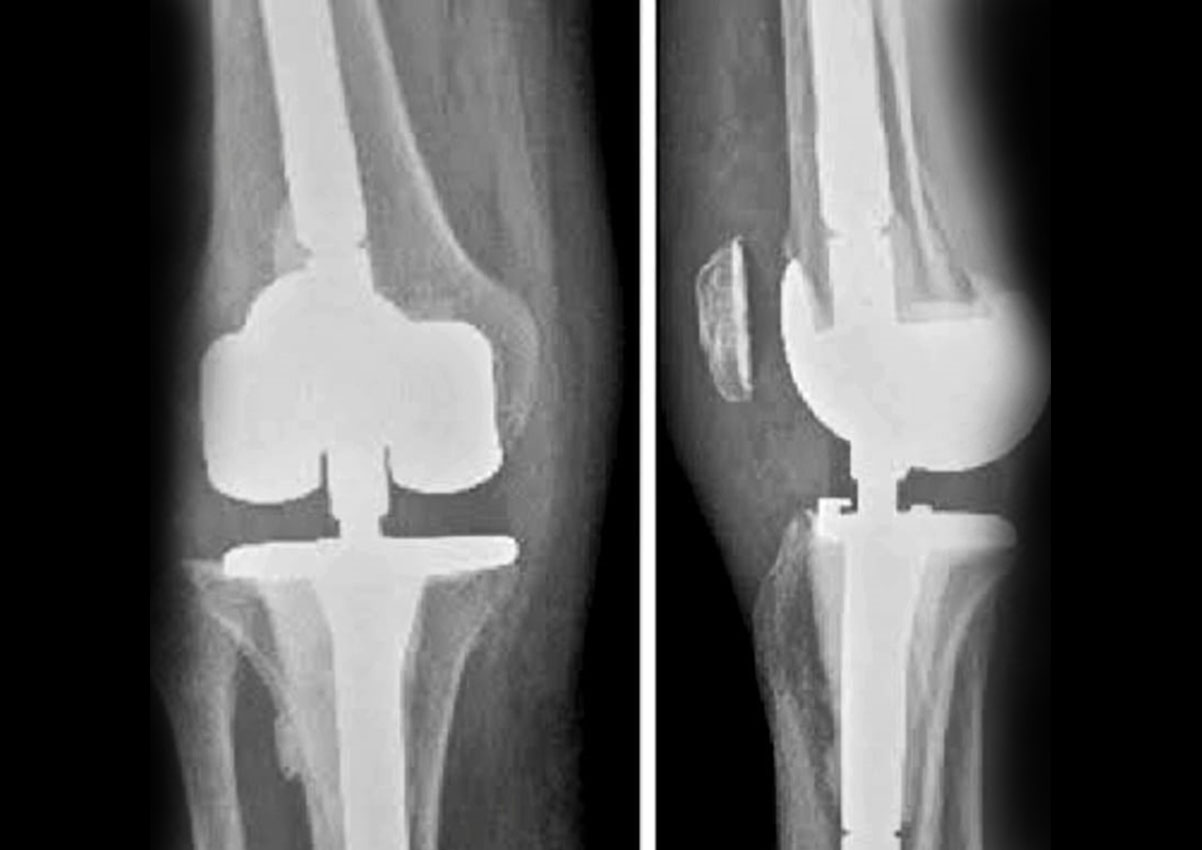
Joint revision is essential when prior replacements fail or wear out, causing pain and mobility issues. Our goal is to reduce your pain, restore function, and enhance your quality of life. Potential complications include infection, blood clots, and implant concerns, which our expert team minimizes with precise care. We understand the emotional challenges and provide dedicated support and resources to maintain a positive outlook during your recovery. Contact us for a consultation, and let's work together to improve your joint health and overall well-being.
Revision Arthroplasty in Kolkata
A joint replacement is designed to relieve pain and improve mobility, but complications can sometimes develop after the initial surgery. Implant loosening, wear, infection, instability or fractures around an artificial joint may affect its function and require further surgical evaluation.
Revision arthroplasty is a specialised procedure performed to address problems associated with a previous joint replacement. Depending on the condition, the surgeon may replace one or more components of the existing implant, reconstruct damaged bone or address other complications affecting the artificial joint.
Dr. Debasis Chakravarty is an experienced Orthopaedic and Joint Replacement Surgeon in Kolkata, with over 30 years of experience in orthopaedic surgery. His areas of expertise include primary and complex joint replacement, revision surgery and orthopaedic trauma.
With careful assessment and individualised treatment planning, he helps patients understand the cause of implant-related problems and the appropriate treatment options.
What Is Revision Joint Replacement Surgery?
Revision joint replacement is a surgical procedure performed to repair or replace a previously implanted artificial joint when it develops a complication or no longer functions adequately.
Unlike primary joint replacement, which replaces a damaged natural joint, revision surgery involves working around an existing implant, which may have become loose, worn, infected or damaged.
The procedure may involve:
Removing the existing artificial joint components.
Addressing infection or damaged surrounding tissue, when present.
Reconstructing areas of bone loss.
Repositioning or replacing implant components.
Restoring joint stability and function.
The extent of surgery depends on the underlying problem, the condition of the surrounding bone and soft tissues, and the patient's overall health.
When Is Revision Replacement Required?
Not every patient with discomfort following joint replacement requires another operation. However, certain complications may make revision surgery necessary.
1. Implant Loosening
Over time, an artificial joint component may lose its attachment to the surrounding bone. This can cause pain, instability and difficulty walking.
2. Implant Wear and Damage
The artificial surfaces of a joint may wear down over time, potentially leading to inflammation, bone loss or mechanical failure.
3. Infection Around the Implant
A joint replacement can occasionally develop an infection, either soon after surgery or years later. Treatment may involve antibiotics and, in selected cases, one-stage or staged surgical procedures.
4. Recurrent Joint Dislocation
Repeated dislocation of an artificial hip can indicate problems with implant positioning, soft-tissue support or joint stability.
5. Fracture Around the Implant
A fracture involving the bone surrounding an existing joint replacement is called a periprosthetic fracture. Treatment depends on fracture location, implant stability and bone quality.
6. Persistent Pain and Reduced Function
Ongoing pain, stiffness or difficulty performing daily activities following joint replacement requires assessment to identify the underlying cause before considering further surgery.
Types of Revision Arthroplasty
Revision procedures may involve different joints and surgical techniques.
Revision Total Knee Replacement
Revision knee surgery may be required when a previous knee implant develops loosening, wear, infection, instability or other complications.
Depending on the condition, the surgeon may replace some or all components and use specialised implants to address bone loss or restore stability.
Revision Total Hip Replacement
Revision hip surgery addresses complications involving a previously replaced hip joint.
The procedure may involve replacing the ball, socket or stem components, managing bone loss or correcting instability.
Complex Revision Joint Replacement
Some patients require more extensive reconstruction because of significant bone loss, multiple previous operations, infection or complex implant failure.
These cases require detailed surgical planning and appropriate implant selection.
How Is Revision Joint Replacement Surgery Performed?
The surgical approach depends on the joint involved and the cause of implant failure.
Step 1: Clinical Evaluation
The surgeon reviews your symptoms, previous surgical history, medical records and current functional limitations.
Step 2: Diagnostic Investigations
X-rays help assess implant positioning, loosening and bone changes. CT scans, blood investigations, joint fluid analysis or other tests may be recommended depending on the suspected complication.
Step 3: Surgical Planning
The surgeon determines whether the procedure requires partial component exchange, complete implant removal, bone reconstruction or treatment of infection.
Step 4: Removal or Replacement of Components
The affected implant components are removed or exchanged. Specialised implants, bone grafts or additional fixation devices may be required in complex cases.
Step 5: Joint Reconstruction
The surgeon addresses bone defects, restores appropriate alignment and assesses joint stability.
Step 6: Postoperative Monitoring
Following surgery, the patient receives pain management, wound care, mobility guidance and a rehabilitation plan.
Benefits of Revision Joint Replacement
The primary objectives of revision surgery are to address the underlying implant problem and improve joint function.
Potential benefits include:
Relief from pain associated with implant loosening or mechanical failure.
Improved joint stability.
Correction of certain implant-related deformities.
Management of infection involving the artificial joint.
Improved mobility and ability to perform daily activities.
Reconstruction of damaged bone and joint structures.
The extent of improvement depends on the original complication, the condition of the surrounding tissues and the complexity of the procedure. Complete pain relief or restoration of normal joint function cannot be guaranteed.
Why Choose Dr. Debasis Chakravarty for Revision Joint Replacement?
Revision surgery requires careful evaluation of previous implants, bone condition and the cause of failure.
Dr. Debasis Chakravarty is an experienced Orthopaedic and Joint Replacement Surgeon associated with Manipal Hospitals, Kolkata.
Over 30 Years of Orthopaedic Experience
His experience includes primary joint replacement, complex orthopaedic procedures, trauma surgery and revision joint reconstruction.
Advanced Surgical Qualifications
MBBS
M.S. (Orth)
MRCS (Edin)
FRCS (Trauma & Orth)
Specialisation in Joint Replacement
His clinical expertise includes knee, hip, shoulder and elbow replacement, along with revision arthroplasty.
Individualised Surgical Planning
Each failed joint replacement requires a different treatment strategy. Assessment of implant stability, bone loss, infection and joint function helps guide the appropriate surgical approach.
Patients considering revision replacement can consult Dr. Chakravarty to understand their condition and available treatment options.
Recovery After Revision Joint Replacement
Recovery following revision surgery can be more demanding than recovery after an initial joint replacement. The duration depends on the extent of reconstruction, bone quality, general health and postoperative restrictions.
Initial Recovery
Patients are monitored for pain, wound healing, circulation and other postoperative concerns.
Early Mobilisation
Walking with a walker or other support may begin when permitted by the surgical team. Some patients require temporary restrictions on weight-bearing.
Rehabilitation
Physiotherapy and guided exercises help improve joint movement, muscle strength and balance.
Long-Term Recovery
Recovery may take several months, particularly following complex procedures involving bone grafting or extensive reconstruction. Regular follow-up is important to monitor healing and implant function.
Risks and Possible Complications
Revision surgery is generally more complex than primary joint replacement and may carry additional risks.
Possible complications include:
Infection.
Blood clots.
Bleeding.
Joint dislocation or instability.
Fracture around the implant.
Nerve or blood vessel injury.
Persistent pain or stiffness.
Implant loosening or further failure.
Need for another revision procedure.
Your surgeon will discuss individual risks, expected benefits and treatment alternatives before surgery.
Book a Consultation for Revision Joint Replacement in Kolkata
Persistent pain, swelling or instability following a previous joint replacement should not be ignored.
A detailed orthopaedic evaluation can help identify whether the problem is related to implant wear, loosening, infection, instability or another condition.
If you are considering revision replacement, consult Dr. Debasis Chakravarty for an assessment of your joint condition and discussion of appropriate treatment options.
Book an Appointment
Dr. Debasis Chakravarty
Orthopaedic & Joint Replacement Surgeon
+919874441122
Monday - Saturday (8 am - 6 pm)
info@drdebasischakravarty.com
Frequently Asked Questions
1. What is revision arthroplasty?
Revision arthroplasty is a surgical procedure performed to address complications involving a previously implanted artificial joint. It may involve replacing selected components or reconstructing the joint depending on the underlying problem.
2. What is the difference between primary and revision joint replacement?
Primary joint replacement replaces a damaged natural joint for the first time. Revision surgery addresses problems involving an existing artificial joint and may require removal or exchange of some or all implant components.
3. How do I know if my knee replacement is failing?
Persistent pain, swelling, instability, stiffness or difficulty walking after knee replacement may indicate a complication. An orthopaedic evaluation and appropriate imaging are needed to identify the cause.
4. Can a hip replacement be revised more than once?
Yes, further revision procedures may be necessary in selected cases involving recurrent infection, implant failure, instability or other complications. Each additional operation can be more complex because of changes to bone and surrounding tissues.
5. Is revision joint replacement more complicated than the first surgery?
Yes. Revision procedures may involve scar tissue, bone loss, removal of existing implants and reconstruction of damaged structures. The complexity depends on the cause and extent of implant failure.
6. How long does revision joint replacement surgery take?
The duration varies according to the joint involved, the extent of implant removal, bone reconstruction and other surgical requirements. Complex procedures generally take longer than primary joint replacement.
7. What happens if a joint replacement becomes infected?
Treatment depends on the timing, severity and type of infection. Options may include antibiotics, surgical cleaning, implant retention in selected cases or staged replacement surgery.
8. How long does recovery take after revision surgery?
Recovery varies significantly. Some patients resume supported walking relatively early, while complex cases may require several months of rehabilitation and restricted weight-bearing.
9. Can revision surgery completely eliminate joint pain?
Revision surgery aims to address the underlying cause of pain and improve function. However, complete pain relief cannot be guaranteed, particularly when there is extensive bone or soft-tissue damage.
10. Who should I consult for revision replacement in Kolkata?
Patients experiencing complications following hip or knee replacement can consult Dr. Debasis Chakravarty, an Orthopaedic and Joint Replacement Surgeon associated with Manipal Hospitals, Kolkata, for specialist evaluation and treatment planning.